Diário Apícola

Beekeeping News

Research, health, the environment and developments that help explain the world of bees.

View archive →
Ilustração editorial genérica de uma abelha melífera sobre um favo, criada para notícias apícolas; não representa a fonte nem um resultado específico.

Health and disease

Scotland publishes contingency plan for small hive beetle and Tropilaelaps

On 20 November, the Scottish Government published a contingency plan for a suspected or confirmed outbreak of small hive beetle (Aethina tumida) or Tropilaelaps mite. It sets out responsibilities and response stages, from alert and triage through investigation, identification, confirmation and incident management. The plan aims to eradicate an outbreak where practicable and contain it if the pest becomes established, with regular exercises and reviews.

Read story
Ilustração editorial genérica de uma abelha melífera sobre um favo, criada para notícias apícolas; não representa a fonte nem um resultado específico.

Markets and beekeeping

Apimondia highlights traceability and audits in the fight against honey fraud

At the 9th International Muğla Beekeeping and Pine Honey Congress, the chair of Apimondia’s Beekeeping Economy Commission discussed the impact of honey fraud on commercial beekeeping. Alongside laboratory testing, the presentation highlighted honey traceability, audit strategies and economic anomalies in producing regions as tools that can help reduce vulnerability to fraud.

Read story
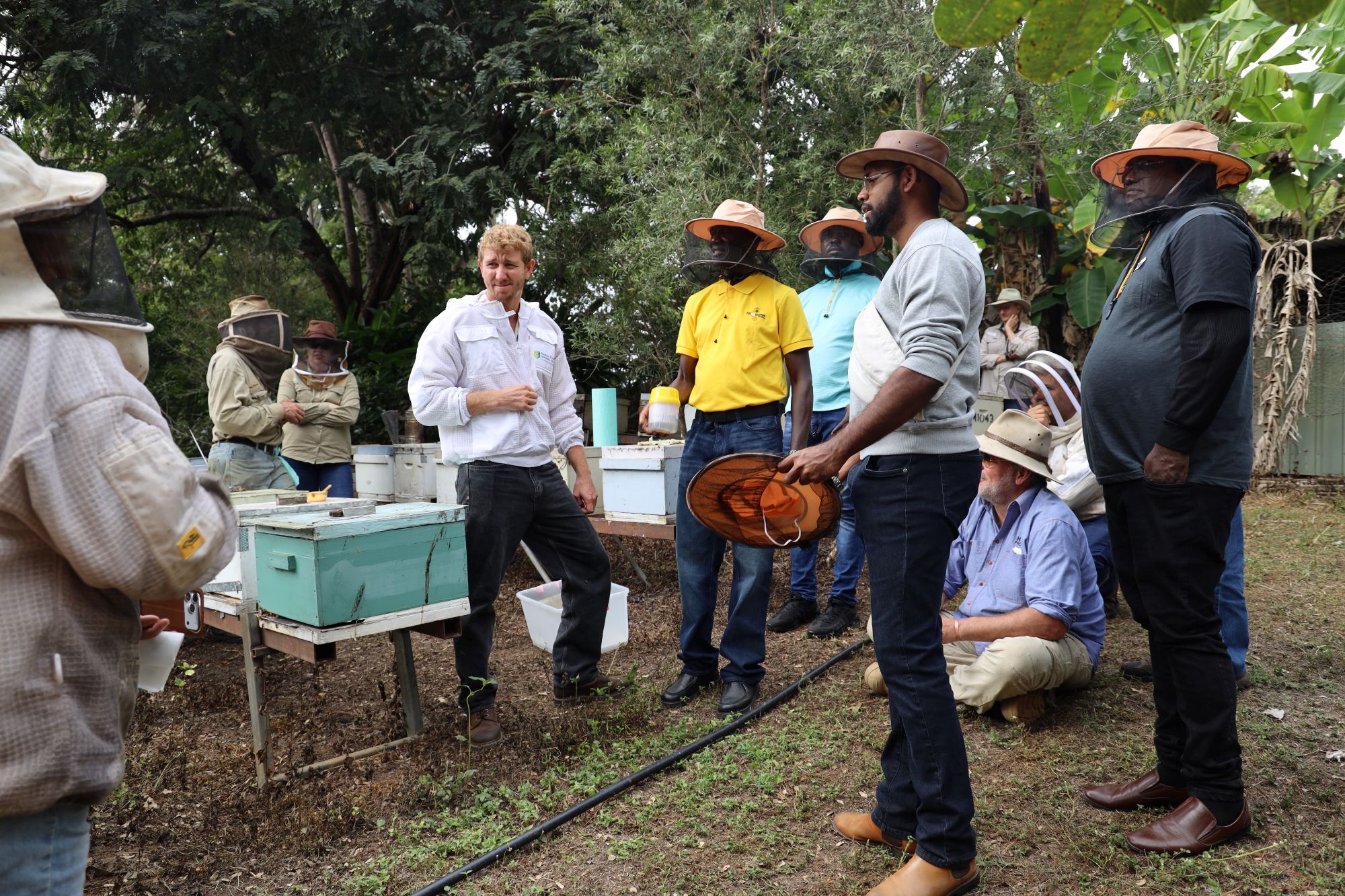
Dr Cooper Schouten durante uma troca de conhecimentos com parceiros fijianos sobre vigilância de pragas apícolas.

Health and disease

Australia–Pacific partnership strengthens bee health and Fiji’s honey industry

An ACIAR-supported partnership is helping strengthen Fiji’s bee-health preparedness. One initiative is a bee-pest and disease awareness campaign, launched at the Fiji Agriculture Show, initially focusing on Varroa and American foulbrood. The collaboration brings together the Fiji Beekeepers Association, government agencies and the Biosecurity Authority of Fiji. It also supports training in surveillance and disease management, alongside work on honey quality and marketing.

Read story
Abelha melífera sobre um favo de mel, numa ilustração editorial genérica para notícias apícolas.

Research and science

Exploratory study links RNA editing with seasonal adaptation in honey bees

Published on 19 November in BMC Genomics, the article compares RNA editing patterns in spring and overwintering honey bee workers. In exploratory analyses of two colonies, 20 of 22 shared differential editing sites showed higher levels in winter groups. The authors note that the results are based on only two colonies and that the possible role of these patterns in seasonal adaptation requires biological validation.

Read story
Abelha melífera sobre um favo de mel, numa ilustração editorial genérica para notícias apícolas.

Health and disease

Study links low oxygen at altitude to reduced Varroa reproduction

Published in PLOS Biology on 19 November, the study reports experiments with Varroa-infested Tibetan honey bee colonies placed at different altitudes. Above 3,500 metres, mites had lower fertility and slower offspring development; similar effects were observed in low-altitude hives with oxygen experimentally reduced. This is a research finding, not a ready-to-use treatment: the mechanism and broader applicability need further study.

Read story
Abelha melífera sobre um favo de mel, numa ilustração editorial genérica para notícias apícolas.

Research and science

FDA-funded project will investigate new treatments for honey bee diseases

Christopher Mayack of William Paterson University has joined a five-year project led by the University of California, Davis and funded by the FDA. The team will screen 400 already-approved medicines for possible candidates against Nosema ceranae and assess residues in bees and hive products after field trials. This is ongoing research: no approved treatments or beekeeper recommendations have been announced.

Read story